Spaces
Office Feng Shui: Desk Placement and Practical Tips for a Calmer Workspace
Office Feng Shui: Desk Placement and Practical Tips for a Calmer Workspace
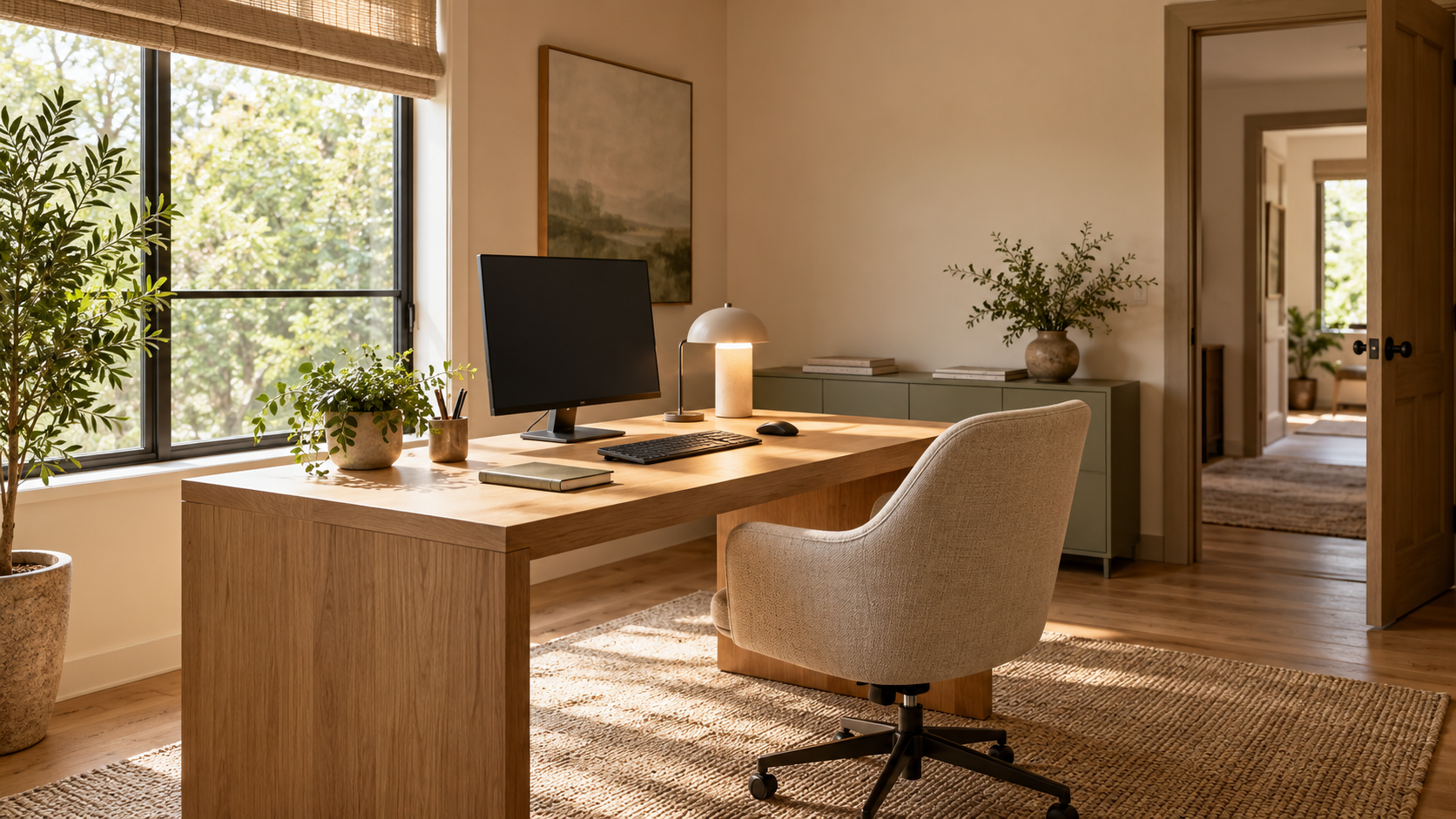
A workspace can look attractive and still feel difficult to use. Your screen may catch the afternoon sun, paperwork may crowd the keyboard, or people may pass immediately behind your chair throughout the day.
Office Feng Shui offers a framework for considering these details together: where you sit, what supports you, how people move through the room, and whether the space suits the work you do.
You do not need a larger office or a collection of symbolic objects to begin. Start with your desk position, lighting, storage, and daily routines.
This guide explains common office Feng Shui principles and practical ways to apply them in a private office, shared workplace, or small home office. Traditional interpretations are presented as cultural guidance, not guarantees of productivity, promotion, or financial success.
What Is Office Feng Shui?
Office Feng Shui applies Feng Shui principles to a working environment. Depending on the approach, an assessment may consider physical layout, compass orientation, the building, and the people using it.
A useful starting point is the relationship between your desk and its surroundings.
Can you sit comfortably? Is the entrance visible? Do doors open freely? Is your screen readable throughout the day? Does storage support your work, or compete with it?
A practical arrangement should respond to those questions before adding decorative details.
1. Position Your Desk with a View of the Entrance
A common recommendation in contemporary Feng Shui practice is the “command position.”
For a desk, this generally means:
- You can see the entrance while seated.
- You are not directly in line with the doorway.
- There is a stable backdrop behind your chair where possible.
- There is enough room to sit down, stand up, and move comfortably.
A position diagonally across from the entrance may provide this arrangement, but it is not a rule that every room can accommodate.
In Feng Shui language, the entrance is associated with the arrival and movement of qi. A desk outside the doorway’s direct path is intended to provide a more settled position from which to work.
Practically, a view of the entrance may also make it easier to notice people approaching instead of being surprised by movement behind you.
Should Your Desk Face the Door?
You do not need to face the doorway directly.
The aim is to have a comfortable view of the entrance without placing the desk in a busy circulation route. Avoid blocking the door, narrowing an exit, or forcing visitors to squeeze around furniture.
Think “aware of the entrance,” rather than “directly opposite the entrance.”
What If Your Back Has to Face the Door?
In a fixed office or a small room, moving the desk may not be possible.
Try a modest adjustment first: turn the desk slightly, choose another seating position if permitted, or move unnecessary furniture out of the approach to your chair.
Some Feng Shui practitioners suggest a small mirror to provide a view behind you. This is optional. Do not use one if it creates glare, distracting reflections, or exposes confidential information.
A constrained desk position does not predict a poor career outcome. Work with the space available.
2. Create Support Behind Your Chair
Many Feng Shui approaches favor a solid wall behind the main working position. Symbolically, it represents support and stability.
If possible, avoid sitting immediately in front of a frequently used doorway or with a busy walkway directly behind you.
Where a solid wall is unavailable, a quieter position, an appropriate partition, or a different desk orientation may be more practical.
Do not place unstable shelving or heavy, unsecured objects behind or above your chair. In a shared workplace, keep changes within the building’s safety requirements and your employer’s rules.
Your chair itself also matters. Choose a setup that supports comfortable work rather than a chair selected only for its appearance.
3. Place Your Desk Beside a Window Without Creating Glare
Natural light can make an office feel welcoming, but a bright window is not automatically the best direction to face.
Check your screen at the times you actually work. A layout that looks pleasant in the morning may produce reflections or strong contrast later in the day.
A practical starting point is to position the monitor at a right angle to the window, so daylight comes from the side. Adjust blinds, curtains, or the desk angle as needed.
OSHA’s workstation guidance recommends arranging lighting and screens to minimize glare from windows, lamps, and overhead lights. Computer workstation lighting guidance (https://www.osha.gov/etools/computer-workstations/workstation-environment)
From a Feng Shui perspective, the goal is a balanced working environment. A beautiful view is less useful if it makes your workstation uncomfortable.
4. Keep the Working Surface Clear Enough to Use
A desk does not need to be empty. It needs to support your current tasks.
Keep frequently used items within comfortable reach and give occasional supplies a separate home.
A simple arrangement might include:
- A clear central area for the keyboard or current task.
- A designated place for incoming paperwork.
- Storage for reference material.
- A small area for personal items.
- Managed cables that do not obstruct movement.
Feng Shui often describes clutter as interrupting the movement of qi. In everyday terms, unnecessary objects can make it harder to find what you need and distinguish current work from unfinished tasks.
Begin with one small area rather than attempting to organize the entire office at once.
Do You Need a Desk Bagua Map?
Some Feng Shui approaches apply a Bagua map to the desktop and assign symbolic areas to different life themes.
This can be used as a reflective organizing tool, but it is not a requirement for every office. Different schools use different methods, and a desktop map should not override your actual workflow.
Do not move essential equipment into an awkward position simply to place it in a symbolic sector.
5. Choose Comfortable Equipment Placement
Feng Shui advice should work alongside a usable workstation.
Arrange your main monitor, keyboard, and chair so you can work without repeatedly twisting or reaching. Keep adequate space beneath the desk for your legs, and avoid using this area as a crowded storage zone.
OSHA recommends considering the monitor together with the desk, chair, and keyboard, rather than adjusting each item in isolation. Monitor placement guidance (https://www.osha.gov/etools/computer-workstations/components/monitors)
If a suggested compass direction requires you to work sideways, sit in glare, or obstruct a route, reconsider the arrangement.
Comfort and safe access should guide the practical layout.
6. Use Color and Materials with Restraint
The Five Elements—Wood, Fire, Earth, Metal, and Water—provide a symbolic framework used in Feng Shui.
You can also use them as a starting point for thinking about the visual balance of your office. Natural wood, textiles, metal details, plants, and color accents each contribute to its character.
You do not need to display all five elements literally.
For an understated workspace, start with a consistent base palette and a few accents. Soft greens, muted blues, warm neutrals, or other colors you enjoy may work well with your existing furniture and light.
There is no universal office color that guarantees success. A personalized traditional assessment requires more context than choosing a favorite color or identifying a birth-year animal.
If the room already feels visually busy, simplify before adding more.
7. Add Plants Only Where They Fit
Plants can be an enjoyable addition to a workspace. In Feng Shui symbolism, they are often associated with Wood and growth.
Choose plants according to the available light, care requirements, and the people or animals sharing the space.
Place them where they do not:
- Block the entrance or a walkway.
- Compete with essential desk space.
- Obstruct your view of the screen.
- Drip water onto electrical equipment.
A small, well-maintained plant may suit the room better than a large one that is difficult to care for.
You do not need a particular “money plant,” fountain, or decorative cure to create a functional office.
Office Feng Shui for Small Rooms and Shared Workplaces
You may have little control over the furniture in a rented home, open-plan office, or shared workspace.
Focus on the parts you can change.
Your constraint
A practical adjustment
The desk cannot move
Adjust the screen, lamp, chair, and items within reach
People walk behind you
Explore an alternative seat or approved partition
The desk faces a wall
Improve task lighting and keep the immediate view simple
Storage is limited
Use suitable vertical storage without blocking legroom
The office is shared
Keep common routes clear and agree on shared storage
Daylight causes glare
Adjust blinds and screen orientation
Work equipment fills a bedroom
Put materials away or close equipment when work ends
Ask permission before moving shared furniture or installing fixtures.
The aim is not to force a perfect diagram onto an imperfect room. It is to make the available space easier to use.
Home Office Feng Shui: Create an End to the Working Day
When work takes place at home, the desk can remain a visible reminder of unfinished responsibilities long after the day ends.
Create a short closing routine:
- Put loose paperwork in its designated place.
- Write down the next task.
- Close or put away work equipment.
- Clear the chair and walking route.
- Adjust the lighting for the room’s evening use.
In Feng Shui terms, this helps distinguish a more active working area from the quieter functions of the home.
If your desk is in the bedroom, a closed cabinet, suitable screen, or simple storage box may help reduce visible work materials. Keep ventilation, exits, and access to the bed clear.
Your Office Feng Shui Checklist
Use this checklist to review your workspace. Complete the items that are practical for your room and working arrangements.
Interactive checklist
Your Office Feng Shui Checklist
Use this checklist to review your workspace. Complete the items that are practical for your room and working arrangements.
- I can see the entrance from my desk where the layout allows.
- My desk does not block the doorway or a main walking route.
- The area behind my chair feels stable and allows comfortable movement.
- My screen position reduces glare from windows and lights.
- My chair, monitor, and keyboard work together comfortably.
- I have enough clear desk space for my current tasks.
- Paperwork and supplies have designated storage.
- Cables and stored items do not obstruct legroom or walkways.
- Plants and personal objects fit the space without crowding it.
- I have a short routine for resetting the workspace when work ends.
Save your checklist and revisit it after making one or two changes.
Frequently Asked Questions
Which Direction Should My Office Desk Face?
There is no single compass direction that is best for everyone.
Some traditional systems consider personal directions or the building’s orientation. These require a defined method and more information than a general article provides.
For a first review, prioritize a comfortable workstation, clear access, manageable lighting, and an appropriate relationship to the entrance.
Is It Bad Feng Shui to Face a Wall?
A wall-facing desk is not an automatic problem. It may be the most practical option in a small room.
Review the entrance behind you, lighting, legroom, and the space around the chair. Improve what you can without creating a less usable arrangement elsewhere.
Can My Desk Face a Window?
It can, but check brightness, reflections, temperature, and distractions.
If the window creates glare or strong contrast around the monitor, try placing the screen at a right angle to it and adjusting the window covering.
Should I Put a Mirror in My Office?
A mirror is optional. Some practitioners use one to improve awareness of the entrance, but reflections can also be distracting.
Check what it reflects, including computer screens and private documents. Avoid adding a mirror simply because it appears on a generic list of Feng Shui remedies.
Will Office Feng Shui Bring More Money or a Promotion?
Furniture placement and decorative objects do not guarantee income, clients, or promotion.
Feng Shui can be used as a traditional framework for reflecting on your surroundings. Career and business outcomes also depend on skills, decisions, relationships, and wider circumstances.
Can I Improve Office Feng Shui Without Buying Anything?
Yes. Begin by reviewing desk placement, clearing a walking route, adjusting a lamp, organizing paperwork, or moving an existing object.
Useful changes often start with what you already own.
Start with One Change You Can Feel
Sit at your desk and notice what makes work unnecessarily difficult.
Is the screen catching light? Is the entrance hidden behind you? Do papers compete with your keyboard? Is your chair difficult to move?
Choose one manageable adjustment, use the space, and review the result before changing more.
For a shared or unusually shaped office, personalized Feng Shui advice can help you compare layout options. A floor plan showing doors, windows, fixed furniture, and your working position provides a useful starting point.
Explore our consultation options if you would like guidance tailored to your actual workspace.
Feng Shui is presented here as a traditional cultural practice and a framework for arranging space with intention. It is not a substitute for professional medical, legal, financial or psychological advice. Read the disclaimer.
Want help applying this at home?
Share your layout and goals and receive a clear, personalized PDF plan.