Learn
How to Feng Shui Your Bedroom for Better Sleep
Explore bedroom Feng Shui with practical tips for bed placement, mirrors, lighting and small spaces, plus a checklist for creating a calmer room.
Your bedroom should feel like a place where the day can slow down. Yet an awkward bed position, bright lighting, crowded surfaces, or a mirror catching movement can make the room feel busier than you would like.
Bedroom Feng Shui offers a way to look at these details together. Rather than filling the room with symbolic objects, start with its layout: where you sleep, what you see from your pillow, and how comfortably you move through the space.
This guide explains how to position your bed, place mirrors, soften lighting, and reduce clutter—including practical alternatives for small bedrooms and rented homes.
Feng Shui is a traditional approach to arranging spaces, not a treatment for insomnia. Its symbolic explanations should be distinguished from established sleep advice, such as keeping the bedroom quiet, cool, and dark.
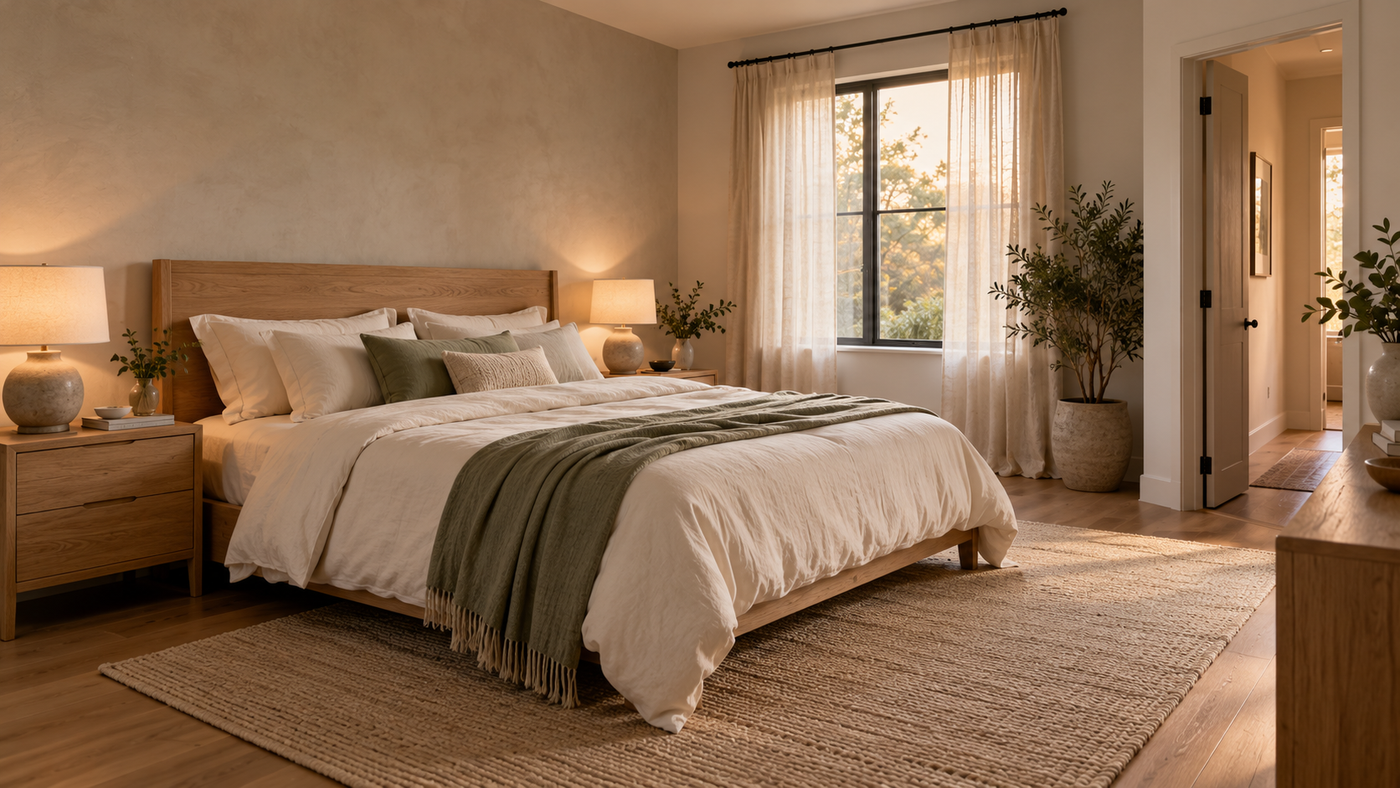
What Does Feng Shui Suggest for a Bedroom?
In Feng Shui, a bedroom is generally treated as a more yin space: quieter, gentler, and less active than a kitchen, entrance, or home office.
The aim is to create a room that feels sheltered and settled. Common principles include a supported headboard, a comfortable relationship between the bed and doorway, unobstructed walking routes, and fewer visually active features around the sleeping area.
Different Feng Shui schools interpret these principles differently. You do not need to achieve a perfect arrangement to make useful changes. Start with comfort, safety, and the features that affect your room most.
1. Place Your Bed Where You Can See the Door
A common Feng Shui recommendation is to place the bed in a “command position.” This means you can see the bedroom entrance while lying down, without the bed sitting directly in line with the doorway.
A position diagonally across from the door often works, but the room’s actual layout matters more than following a diagram exactly.
Check three things from your usual sleeping position:
- Can you see the entrance without turning awkwardly?
- Is the bed outside the doorway’s direct line?
- Can the door open fully, with a clear route into the room?
In traditional Feng Shui language, the entrance is a place where qi enters and moves through the space. Positioning the bed away from its direct path is intended to create a more settled resting area.
You do not need to worry if your room cannot accommodate this arrangement. A safe, comfortable layout is the starting point.
Keep the Head of the Bed Away from the Entrance Where Possible
Avoid placing your head and pillow immediately beside the bedroom entrance when another comfortable position is available.
The goal is not to move the pillow as far from the door as possible. It is to give the head of the bed a sheltered position while maintaining awareness of the entrance.
Practically, some separation may also help keep your pillow away from hallway light, passing movement, and door noise. If the bed must remain close to the doorway, keep the entrance clear and address those specific disturbances.
2. Give Your Headboard a Stable Backing
Many Feng Shui approaches favor a solid wall behind the headboard. Symbolically, this represents support and stability.
Choose a secure headboard and make sure the bed does not wobble or shift. Avoid placing heavy shelving or poorly secured objects above your pillow.
If the only workable position is beneath a window, focus on the actual conditions:
- Use suitable curtains or blinds to control unwanted light.
- Address uncomfortable drafts where possible.
- Keep ventilation and any required emergency exit accessible.
- Make sure the headboard is secure.
A window behind the bed does not mean the room is beyond improvement. Work with its constraints rather than forcing an unsafe arrangement.
3. Place Mirrors Carefully
Many traditional Feng Shui approaches advise against a mirror directly reflecting a sleeping person. Mirrors are often described as active features that reflect and redirect qi, while the bedroom is intended to feel restful.
A mirror may also catch passing movement or reflect light toward the bed. Whether it bothers you is worth checking from your pillow—not only while standing in the room.
Useful mirror positions include:
- Inside a wardrobe door.
- On a side wall that does not directly reflect you in bed.
- Near a dressing area, angled away from the sleeping space.
If you have fixed mirrored wardrobe doors, a suitable curtain or cover can be an alternative. Ensure it is securely installed and does not obstruct ventilation or movement.
Some Feng Shui practitioners use mirrors to improve the view of an entrance when the bed cannot be repositioned. Because recommendations vary, treat this as a layout-specific choice rather than a universal rule. If reflected light or movement feels distracting, choose another solution.
4. Make Lighting Gentler in the Evening
A bedroom can feel very different under a bright ceiling light and a softer bedside lamp.
In Feng Shui terms, gentler evening lighting helps the room shift from an active, yang atmosphere toward a quieter, yin setting. Practically, it also gives you more control over brightness.
Consider:
- A bedside lamp instead of relying entirely on overhead lighting.
- Dimmable lights or lower-brightness lamps for the evening.
- Curtains or blinds that reduce unwanted outdoor light.
- Repositioning a mirror that reflects light toward your eyes.
Keep enough light for safe movement when needed. A dim night light is reasonable if it helps you navigate the room.
For sleep itself, established guidance recommends a bedroom that is quiet, cool, and dark. These are sleep-environment recommendations rather than evidence that Feng Shui’s qi explanations improve sleep. NHLBI healthy sleep guidance (https://www.nhlbi.nih.gov/health/sleep-deprivation/healthy-sleep-habits)
5. Clear the Routes Around Your Bed
You do not need an empty bedroom. You need enough space to use it comfortably.
Start with the route from the door to the bed. Remove items that force you to step over bags, squeeze past furniture, or move objects every night.
Feng Shui often describes clutter as interrupting the movement of qi. In everyday terms, a clearer route makes the room easier to navigate and reduces the number of unfinished tasks in view.
Focus on three areas:
- The floor beside the bed.
- The bedside surface.
- The bedroom entrance.
Keep useful items within reach, but move unrelated paperwork, spare packaging, and items waiting to be repaired elsewhere when possible.
What About Storage Under the Bed?
Traditional advice often favors a clear space beneath the bed. In a small home, however, under-bed storage may be necessary.
If you use it, keep the contents organized, accessible, and easy to clean around. Bedding and seasonal clothing can be practical choices. Avoid storing damp items or creating a setup that traps dust and is difficult to maintain.
Do not sacrifice essential storage simply to satisfy a rule.
6. Separate Rest from Work Where You Can
A desk, laundry pile, or visible work documents can make the bedroom feel like an extension of the day’s responsibilities.
In Feng Shui language, work introduces more active, yang qualities into a space intended for rest. A practical response is to create a visible end to the working day.
If the desk must stay:
- Close the laptop when work finishes.
- Put papers and equipment in a drawer or box.
- Turn the chair toward the desk.
- Keep the view from the pillow as simple as possible.
You do not need a large divider or a complete redesign. A consistent evening reset can make the room feel more distinct from your workspace.
7. Choose Colors and Objects That Feel Calm to You
There is no single bedroom color that guarantees better sleep.
For a restrained bedroom, you might choose muted greens, soft blues, warm neutrals, or other colors you find comfortable. Use brighter accents selectively if you enjoy them.
Feng Shui associates colors and materials with the Five Elements, but the appropriate balance depends on the approach being used and the wider setting. Painting every bedroom the same “lucky” color is not a substitute for considering its light, layout, and occupants.
Choose artwork and personal objects you enjoy seeing from bed. Keep heavy pieces securely mounted, and avoid adding decorative objects that make bedside surfaces harder to use.
Feng Shui for Small Bedrooms and Rented Homes
A small room may not allow a textbook command position, space on both sides of the bed, or a movable wardrobe. That is normal.
Use this order of priorities:
- Keep doors, exits, and walking routes usable.
- Make the bed and headboard stable.
- Reduce unwanted light, noise, and uncomfortable drafts.
- Adjust mirrors and visible clutter.
- Improve the bed’s relationship to the entrance where the layout allows.
For a shared bed, access from both sides is often more convenient when space permits. If one side must sit against a wall, make sure getting in and out remains manageable.
Renters can focus on reversible changes: repositioning furniture, changing lamps, organizing storage, and using suitable window coverings. Ask permission before installing fixtures or altering the property.
Bedroom Feng Shui Checklist
Start with the items that are realistic for your room. This is a practical review, not a test your bedroom must pass perfectly.
Interactive checklist
Bedroom Feng Shui Checklist
Start with the items that are realistic for your room. This is a practical review, not a test your bedroom must pass perfectly.
- I can see the bedroom entrance from my bed where the layout allows.
- My bed is outside the doorway’s direct line where practical.
- The head of my bed is away from the entrance where possible, with stable backing.
- Mirrors do not create distracting reflections or direct light toward my pillow.
- I can adjust lighting and reduce unwanted light at bedtime.
- The route between the entrance and bed is clear.
- My bedside area holds the items I need without unnecessary clutter.
- Under-bed storage, if used, is organized and easy to clean around.
- Work materials are put away or visually separated at the end of the day.
- Doors, ventilation, and any required emergency exits remain accessible.
Save your checklist if you would like to review the room again after making changes.
Frequently Asked Questions
Does My Bed Need to Face a Particular Compass Direction?
Some Feng Shui systems consider compass directions and personal or building-specific calculations. The command position is a separate layout principle: seeing the entrance without lying directly in its path.
For a general bedroom review, start with a safe, comfortable arrangement. Avoid rotating the bed toward a suggested compass direction if it blocks access or creates a less usable room.
Can I Keep a Mirror in My Bedroom?
Yes. Many Feng Shui recommendations concern what the mirror reflects, rather than prohibiting every bedroom mirror.
Check it from your sleeping position. If it reflects you, passing movement, or unwanted light in a way you find distracting, reposition it or consider a suitable cover.
What If My Bed Must Be Beside the Door?
Work with the space you have. Keep the doorway clear, give the headboard stable support where possible, and reduce hallway light or noise that reaches the pillow.
There is no need to treat a constrained layout as a prediction of bad outcomes.
Do I Need to Buy Feng Shui Objects?
No. Begin with the bed position, lighting, mirror placement, and storage you already have. Decorative objects are optional, not prerequisites for a more comfortable bedroom.
Can Feng Shui Treat Insomnia?
Feng Shui is not an established treatment for insomnia. Changing your bedroom may help it feel more comfortable, but persistent sleep difficulties deserve medical advice. NHLBI information on insomnia treatment (https://www.nhlbi.nih.gov/health/insomnia/treatment)
Make One Useful Change First
Begin by lying on the bed and looking around. Notice the entrance, the mirror, the lighting, and anything that makes the space difficult to use.
Choose one change you can complete today: clear the path to the door, redirect a mirror, soften the evening light, or organize the bedside surface.
For a room with competing layout constraints, a personalized Feng Shui consultation can help you consider the options together. Share a floor plan, door and window locations, and the furniture that must remain so the recommendations can respond to your actual space.
Feng Shui is presented here as a traditional cultural practice and a framework for arranging space with intention. It is not a substitute for professional medical, legal, financial or psychological advice. Read the disclaimer.
Want help applying this at home?
Share your layout and goals and receive a clear, personalized PDF plan.