Learn
October 2026 Feng Shui: Lucky Directions, Flying Stars & Practical Tips
October is a natural time to refresh your home and rethink how your space supports everyday life. In traditional Feng Shui, October 2026 also brings a new monthly Flying Star arrangement. Explore the symbolic influences of this month, the directions to approach with care, and practical adjustments to create a calmer, more balanced living environment.
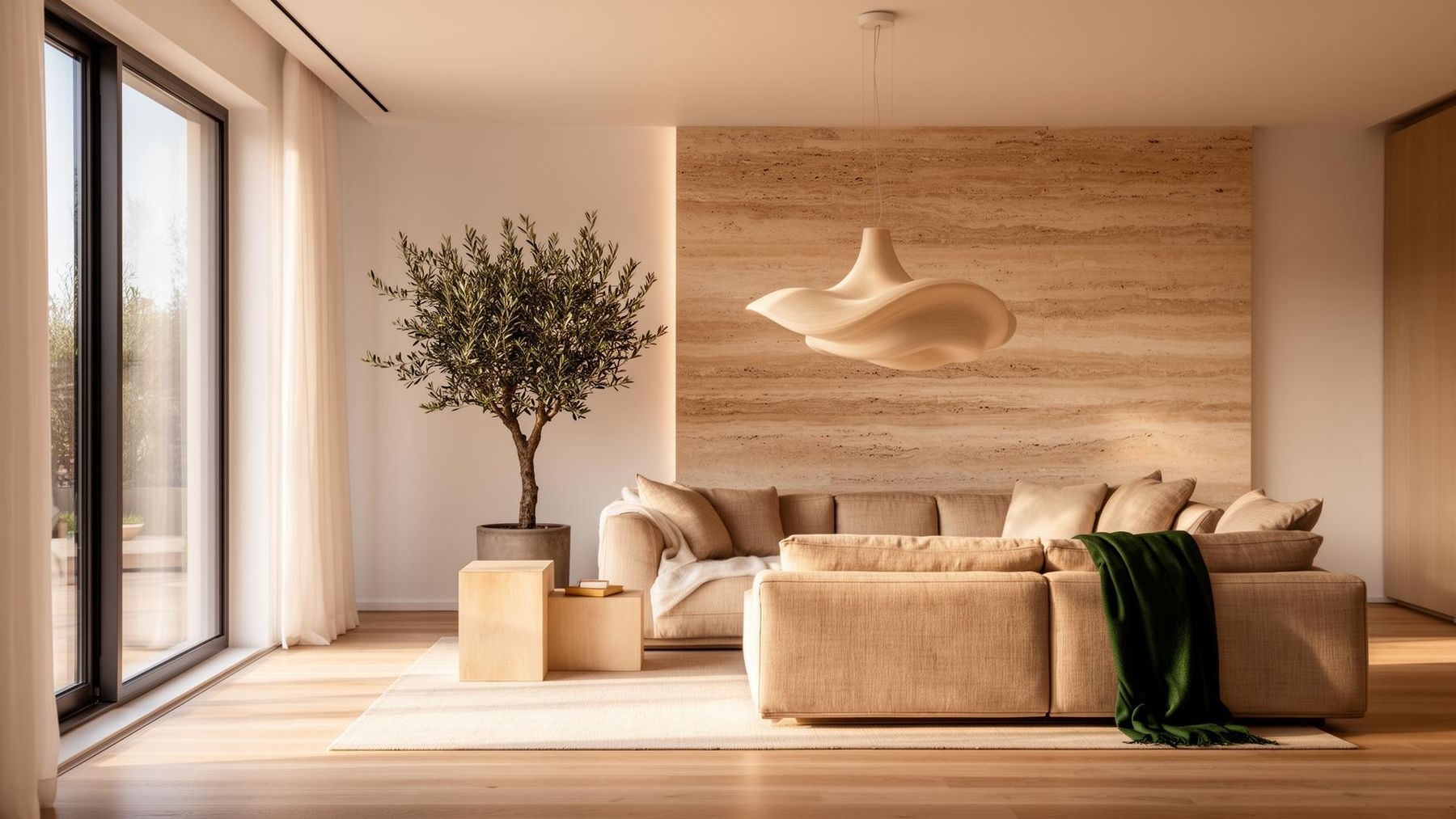
October 2026 Feng Shui: Lucky Directions, Flying Stars & Practical Tips
An approachable guide to the
traditional Feng Shui influences of October 2026—and simple ways to bring greater balance and intention to your living space.
Updated: October 8, 2026
October is a natural time to reconsider how our homes support daily life. In the Northern Hemisphere, daylight grows shorter, routines shift, and we spend more time indoors. It is an opportunity to create spaces that feel calmer, more comfortable, and better suited to the months ahead.
In traditional Feng Shui, October 2026 also brings a new monthly Flying Star arrangement, assigning different symbolic influences to the nine sectors of a home.
But good Feng Shui does not have to begin with complicated charts or expensive objects.
This guide explains the traditional October 2026 directions, the areas practitioners pay particular attention to, and practical changes you can consider in your own home.
October 2026 Feng Shui at a Glance
According to the Xuan Kong Flying Star tradition, October 2026 is associated with the following monthly arrangement:
Area
Monthly Star
Traditional Interpretation
Center
9 Purple
Recognition, celebration and future prosperity
Southeast
8 White
Material stability and accumulated prosperity
Northwest
1 White
New opportunities, wisdom and career
Southwest
6 White
Authority, discipline and support
South
4 Green
Learning, creativity and relationships
North
5 Yellow
Traditionally treated as a sensitive sector
West
2 Black
Traditionally associated with health concerns
East
7 Red
Caution around loss and conflict
Northeast
3 Jade
Disagreements and tension
These are traditional symbolic associations, not scientifically established predictions.
The three most useful takeaways for October are simple: consider the Center and Southeast as areas of positive symbolic emphasis, avoid unnecessary major disturbance in traditionally sensitive sectors such as the North, and prioritize changes that make your home more comfortable and functional.
Remember that the annual Flying Star chart also matters. A monthly star should not be interpreted in isolation.
When Does the October 2026 Feng Shui Month Begin?
In many traditional Feng Shui systems, monthly changes are calculated using the Chinese solar calendar rather than the first day of the Western calendar month.
The October 2026 Flying Star month begins around October 8, 2026, at Cold Dew (Han Lu, 寒露) and continues until the beginning of November 7, 2026, at Start of Winter (Li Dong, 立冬). The precise changeover time depends on the calendar and time zone being used.
This distinction matters because October 1–7 belongs to the preceding Feng Shui solar month.
The October period is also associated with the Earth Dog month in the traditional Chinese calendrical system.
For readers new to Feng Shui, these dates are simply part of the method used to organize traditional monthly calculations. You do not need to reorganize your entire home each time the calendar changes.
Understanding the October 2026 Flying Stars
Flying Star Feng Shui, also called Xuan Kong Fei Xing, is a traditional system that considers how symbolic energies change through time and across different parts of a building.
Each of the nine numbered stars is associated with an element and a range of traditional meanings.
In October 2026, Star 9 occupies the Center of the monthly chart. This is particularly notable because the current Feng Shui cycle is Period 9, commonly dated from 2024 to 2043.
However, a complete traditional assessment considers more than the monthly chart. It may also include the building's facing direction, construction history, annual Flying Stars, room functions, and other features of the space.
For this reason, monthly directions are best understood as a general educational guide rather than a universal prescription for every home.
Traditionally Favorable Feng Shui Areas in October 2026
Center — Star 9: Recognition and Completion
The Center receives monthly Star 9, traditionally connected with visibility, celebration, progress and future prosperity.
In 2026, this monthly star combines with the annual Star 1. Some Flying Star schools regard this pairing as especially supportive.
A practical approach: consider the central area of your home. Is it easy to move through? Does it feel cramped or visually overwhelming?
You might improve this space by simplifying unnecessary furniture, removing clutter from circulation routes, or introducing more balanced lighting.
There is no need to purchase special objects or create a decorative display simply because of the monthly chart.
Southeast — Star 8: Stability and Prosperity
The Southeast receives monthly Star 8, combined with annual Star 9.
In traditional Flying Star interpretation, this is often considered a favorable pairing, although schools may differ on the importance of Star 8 during Period 9.
If the Southeast happens to contain a room you use regularly, consider whether you could improve its organization and functionality.
A desk, reading chair, or family sitting area might benefit from adequate lighting, comfortable furniture and a clear layout.
Remember: traditional prosperity associations do not guarantee wealth or financial success. The most reliable value of improving a living space is creating an environment that works better for you.
Northwest — Star 1: Opportunities and Clarity
Monthly Star 1 enters the Northwest, traditionally associated with knowledge, communication and new beginnings.
However, the Northwest also contains the annual Star 2 in 2026, so it would be misleading to describe this sector as universally favorable.
Rather than making major adjustments based on the monthly star alone, focus on ordinary improvements such as a comfortable chair, a well-organized work surface, and lighting appropriate for reading or focused work.
Feng Shui Areas to Approach with Care This October
Traditional Feng Shui guidance frequently identifies particular sectors where practitioners prefer to limit major disturbances. These recommendations reflect a cultural system of interpretation, not evidence that occupying a room will cause illness, conflict or misfortune.
North — Monthly Five Yellow
The North receives monthly Star 5, often called the Five Yellow.
Traditional practitioners commonly suggest keeping this sector relatively undisturbed during the month, particularly where major renovations, drilling or demolition are concerned.
For a typical household, this does not mean avoiding the room or abandoning necessary work.
Practical guidance: avoid unnecessary disruption where convenient, but never postpone urgent maintenance, structural repairs, electrical work, or safety improvements because of a Flying Star chart.
West — Monthly Star 2
Monthly Star 2 occupies the West, where it meets annual Star 3.
Some traditional interpretations associate this combination with discomfort or disagreement.
There is no reliable evidence that a compass sector itself causes illness. If this area contains your bedroom, living room or work area, continue using it normally.
Focus instead on adequate ventilation, appropriate temperature, clear walking paths and the general comfort of the space.
South — Annual Five Yellow
Although October brings monthly Star 4 to the South, the annual Five Yellow remains in this sector throughout the 2026 Feng Shui year.
This is a useful example of why monthly and annual charts should be considered together.
In traditional practice, practitioners may prefer to avoid unnecessary major disturbances in the South even when a monthly star is interpreted more positively.
Again, immediate repairs and real-world safety always take priority.
East and Northeast — Communication and Balance
Monthly Star 7 enters the East, while Star 3 occupies the Northeast.
Traditional associations include disagreements, tension or loss.
Rather than treating these as inevitable outcomes, you can use the month as a reminder to make shared spaces easier to live in.
Reduce obstacles in common walkways, organize frequently used objects, and consider whether furniture arrangements support comfortable conversation and daily routines.
These simple changes have practical value regardless of the month or compass direction.
Seven Practical Feng Shui Tips for October
Refresh Your Entryway
Your entrance establishes the first experience of arriving home.
Create space for shoes, coats, umbrellas and other everyday essentials without allowing them to overwhelm the doorway.
Make sure the entrance is safe, accessible and appropriately lit.
In traditional Feng Shui, an inviting entrance symbolizes a welcoming flow of Qi. In everyday life, it can also make arriving home more pleasant.
Review Your Bed Placement
The bedroom is a useful starting point for personal Feng Shui because it is a space most people use daily.
A traditional recommendation is the commanding position: being able to see the bedroom door from the bed without placing the bed directly in line with it, where the room layout allows.
A solid headboard and comfortable access to the bed can also contribute to a more intentional layout.
Not every bedroom offers an ideal arrangement. Work with the actual architecture rather than forcing a rule at the expense of safety or comfort.
Simplify Your Home Office
Autumn can be a useful time to reorganize your workspace.
Consider whether your desk provides enough space, whether glare affects your screen, and whether the chair and lighting are comfortable for long periods.
Traditional Feng Shui often favors a desk position with a view of the entrance and a stable feeling behind the chair.
If that arrangement is impractical, prioritize ergonomic comfort and functionality.
Bring More Intention to Lighting
As daylight becomes shorter in the Northern Hemisphere, lighting can significantly change the feeling of a room.
Layer general illumination with task and accent lighting rather than relying on one harsh overhead source.
Soft, appropriately placed lamps can help make living rooms and bedrooms feel more inviting.
Choose lighting that serves the room's actual activities.
Balance Seasonal Colors and Materials
Traditional Five Elements theory offers one way to think about balance through Wood, Fire, Earth, Metal and Water.
Autumn is often associated with the Metal element in classical Chinese seasonal correspondence.
In contemporary interiors, you might interpret this through restrained metallic details, light neutral colors, and uncluttered arrangements.
However, seasonal Feng Shui does not require replacing your decor or decorating every room with the same element.
Choose materials and colors that complement your existing space.
Make Shared Rooms Easier to Use
Consider whether the living room encourages comfortable movement and conversation.
Do chairs face one another naturally? Are frequently used objects easy to reach? Do any furniture pieces unnecessarily block circulation?
Improving these details may be more useful than adding decorative Feng Shui symbols.
Prepare Your Home for the Coming Season
Review curtains, lighting, entryway organization and areas that have become cluttered during the year.
In cooler climates, consider drafts and heating comfort. In warmer regions, focus on shade, ventilation and the conditions relevant to your home.
The goal is not to perform a monthly ritual perfectly. It is to make thoughtful improvements that support everyday living.
Interactive checklist
Your October Feng Shui Home Checklist
Use this simple checklist as a starting point:
You do not need to complete everything at once. A single, well-considered adjustment can be a sensible starting point.
Does October Feng Shui Apply Differently in the Southern Hemisphere?
October is autumn in much of Europe, North America and northern Asia, but it is spring in Australia, New Zealand and other Southern Hemisphere locations.
This distinction matters when discussing seasonal decorating, daylight, ventilation and climate.
Traditional Chinese seasonal correspondence is rooted in the Northern Hemisphere's solar calendar. How those seasonal associations should be adapted elsewhere is a subject on which Feng Shui practitioners may differ.
The monthly Flying Star chart and seasonal lifestyle recommendations should therefore not be treated as identical concepts.
Wherever you live, focus on the actual needs of your home and use traditional interpretations as optional cultural guidance.
Frequently Asked Questions
What is the luckiest Feng Shui direction in October 2026?
Within common monthly Flying Star interpretations, the Southeast is considered one of the more favorable sectors because monthly Star 8 meets annual Star 9. The Center, with monthly Star 9 and annual Star 1, is also traditionally emphasized. These associations do not guarantee personal or financial outcomes.
Which direction should I be careful with in October 2026?
The North receives monthly Star 5, while the West receives monthly Star 2. The South also contains the annual Five Yellow during 2026. Traditional practitioners often suggest minimizing unnecessary major disturbances in these areas, without postponing essential home maintenance.
Does October 2026 Feng Shui begin on October 1?
No. In the traditional solar-month system used for Flying Star calculations, the October 2026 period begins around October 8, at Cold Dew, and ends at the beginning of November 7, at Start of Winter.
Do I need to buy Feng Shui cures or objects?
No. Buying decorative objects is not a requirement for applying basic home-layout principles. Begin with furniture arrangement, lighting, circulation and organization. Traditional symbolic objects are optional and should never be presented as guaranteeing specific results.
How do I identify the Feng Shui sectors of my home?
A common introductory approach is to find the approximate center of a floor plan, establish compass north, and divide the space into nine directional sectors. Irregular layouts, multiple floors and different Feng Shui schools can make a more detailed assessment necessary. The entrance direction alone is not enough to identify every sector.
Can Feng Shui improve my wealth, relationships or health?
Feng Shui is a traditional cultural practice with symbolic associations related to these areas of life. Scientific evidence does not establish that Flying Star positions can predict or guarantee such outcomes. You can still use Feng Shui as a framework for reflecting on and improving your surroundings, while relying on qualified professionals for financial, relationship or medical concerns.
Make Feng Shui Personal to Your Space
A general monthly Feng Shui chart can offer a starting point, but no two homes are identical.
Your room dimensions, furniture, door positions, windows, personal priorities and daily habits all influence which changes are practical.
If you're unsure how to apply Feng Shui principles to your actual bedroom, living room or home office, Better Feng Shui offers personalized consultation options designed around your space.
Quick Feng Shui Review — $49
For one focused question, such as bed position, desk placement or mirror arrangement.
Room Feng Shui Consultation — $149
For a more complete review of one room, with personalized layout guidance and a practical written action plan.
Find the Right Feng Shui Consultation (https://betterfengshui.com/consultation)
Better Spaces. Better Energy. Better Living.
Editorial note: This article describes selected interpretations from the traditional Xuan Kong Flying Star system. Different schools may interpret star combinations and remedies differently. Feng Shui advice is cultural and educational in nature and does not guarantee health, wealth, relationship or other outcomes.
Feng Shui is presented here as a traditional cultural practice and a framework for arranging space with intention. It is not a substitute for professional medical, legal, financial or psychological advice. Read the disclaimer.
Want help applying this at home?
Share your layout and goals and receive a clear, personalized PDF plan.